Showing posts with label Interior Design Ideas. Show all posts

Friday, November 11, 2016

Is e-commerce taking a 'huge bite' out of the retail construction sector?

ere's no arguing that the internet has changed the way people live, as they are increasingly paying their bills, getting to know each other, and working via online tools. However, the greatest convenience might be the ability to shop the world's markets and retail outlets from the comfort of home. From household staples to furniture, food and artwork, anything can be bought with a credit card and the push of a few keys.
In fact, according to Internet Retailer, on an adjusted basis, eliminating items like cars and restaurant purchases, online shopping — or e-commerce — accounted for more than 10% of all 2015 U.S. retail sales and totaled $340.8 billion. Internet sales have increased approximately 15% annually for the last six years and are expected to hit $523 billion by 2020.
This booming industry is great news for online retailers, but what does it mean for the construction industry?

Warehouse construction on the rise

E-commerce has kept warehouse construction alive, and, according to the Dodge Data & Analytics 2017 Construction Outlook report, that segment will grow another 2% next year in an effort to keep pace with demand. Almost 100 big-box warehouses, representing 60 million square feet in total, saw completion in 2015, leaving only a 7.4% vacancy rate for the segment, according to National Real Estate Investor. Those strong figures are obviously good news for construction companies in the warehouse sector.
"Warehouse construction is built for two reasons — to stock live stores and for e-commerce. With the proliferation of e-commerce, (retailers) are commissioning more warehouse distribution," said Carl Oliveri, partner and construction practice leader at Grassi & Co. Even large store chains like Macy's, he said, are moving toward hybrid models and developing warehouse distribution strategies. "To stay relevant, they have to compete in that space," he said.

A decline in brick-and-mortar building

However, online sales are growing at five times the rate of brick-and-mortar stores, according to a Colliers International report. It doesn't take an expert to read those signs — fewer in-store sales equals a potential decline in new retail construction projects and renovations.

Adding another layer to the problem for contractors: Some retailers who are planning renovations or building new stores are opting for smaller, local contractors in order to save on construction costs and boost an already-injured bottom line.
"Anecdotally, we definitely feel that e-commerce has taken a huge bite out of retail sales," said Chuck Taylor, director of operations for Illinois-based Englewood Construction. Englewood, which performs a significant amount of retail ground-up and renovation work nationwide, has seen a downward deviation in this sector in the last several years, according to Taylor.
Taylor said that by not hiring contractors like Englewood who have brand experience and know the stores inside and out, those retailers are subjecting themselves to a possible bumpy ride on the learning curve with new contractors and are putting more pressure on the architect or corporate construction managers who have to watch the project — and unfamiliar contractor — more closely.

A heightened focus on the customer experience

The exception occurs when the very large retailers look to companies like Englewood for a turnkey experience. "They want to teach the learning curve once and get those expectations out there and recreate (their store model) every time," Taylor said. Of those stores that are still adding to their stock of physical locations, he said, "They are focused on and have shifted to remodels in order to refresh the brand. Everybody is talking about creating a new customer experience."

Of course, millennials are playing a role in this new shopping environment as well. Taylor said retailers are trying to appeal to the millennial desire for convenience in addition to offering the community and social component that demographic wants as well. Muoio said the millennial draw to walkable cities and an urban, mixed-use experience has also changed the brick-and-mortar dynamic. "This is very clear in both the pricing and transaction volume for 'urban storefront' versus big-box or mall properties," he said.
And it's creating that experience that is a challenge. Peter Muoio, chief economist and executive vice president of commercial real estate firm Ten-X, said the constant battle to drive customers to a physical location makes for a "more effective and competitive" environment in the long-term. "Some retailers are increasingly using a 'showroom' approach, where you can try on clothes and feel the fabric but then get the clothing delivered to your door," he said. "This cuts down on the inventory they need to carry, reducing costs, but also reducing square footage of their stores."

What's next for the retail construction sector

These experts emphasized that no one should count brick and mortar out yet. E-commerce is just one of the factors affecting retail construction, according to Richard J. Burstein, partner at Honigman Miller Schwartz and Cohn in Michigan."The e-commerce factor is obviously affecting retail sales to some extent, but not as dramatically as some predicted," he said. The retail sector is experiencing a "new normal," Burstein said. "The trend (toward) smaller stores (isn't all attributable) to e-commerce, but a changing retail marketplace out there is for sure."
Looking ahead, Muoio said that more retailers will likely be turning to the experience-focused business model and expanding into salons, gyms, restaurants and even doctors’ offices. "This will change the look and layout of brick-and-mortar retailing, but it will still be there," he said. "As retailing evolves, there will still be plenty of brick-and-mortar stores." 
Burstein said he's seeing a significant amount of infill development and predicts new building will rise as populations relocate. "But it's certainly not going to be a heated environment for a while," he said.
Perhaps the relocation of millennials is what's responsible for what Oliveri has seen with his clients. "We handle a number of contractors renovating Macy's stores, and they've never been busier," he said. Millennials who have moved to the suburbs and need access to retail have also led to building in those areas.
Taylor said retail renovations still keep Englewood's retail business busy, as their customers struggle to obtain the perfect combination of in-store sales and e-commerce. "Our retail sales from a general construction standpoint have been reduced significantly but are still a component of our business and will continue to be," Taylor said. "It's just different."

A construction boom will force hotels to give you good deals for years to come

The hotel industry is on a building spree, just as competition from nontraditional lodging like home rentals is heating up.
Fueled by low interest rates, developers are in the midst of a hotel-building boom, adding rooms around the world, including in some of the most crowded markets. Investors are also betting big on the industry. Chinese conglomerate HNA Group said Monday (Oct. 24) that it is buying 25% stake in Hilton Worldwide Holdings for about $6.5 billion, just months after it said it would Carlson Hotels, parent company of the Radisson chain.

Hotel industry newcomers include furniture retailer West Elm and designer Karl Lagerfeld, a sign that businesses that have spent decades selling physical goods are paying close attention to changing consumer preference for experiences like travel over objects.


There were 3,521 hotel properties under construction in September 2016, up from 3,093 at the same point last year, according to hotel-industry research firm STR.

Both the number of hotel rooms available and the number of rooms in the construction phase rose in 2016 compared to the previous year; the world’s stock of rooms rose nearly 2% to 16.3 million total.
While the pipeline is thinner than it was in the years leading up to the 2008 financial crisis, growth in planned rooms has accelerated over the last three years in the US.

But with so many new short-stay properties available worldwide, it’s a guest’s market. Travelers can likely count on little increase in nightly rates, if any, from traditional hotels as they try to fend off traditional competitors as well as home-and-holiday rental companies like Airbnb and HomeAway that are moving onto their turf in the business travel and vacation markets.
Occupancy was flat in US hotels in the third quarter, an important period that includes summer holidays, according to STR. Given that backdrop, the new supply will be especially good for guests’ wallets.
“New hotels charge less” to get new guests in the door, says Michael Bellisario, an analyst at investment firm RW Baird.

The number of rooms under construction in Seattle nearly quadrupled from September 2016 to 2015, while construction rose more than 28% and 45% in New York and Los Angeles, two of the biggest markets in the US.

Monday, November 7, 2016

4 Parks That Are Making Their Cities More Beautiful—And Sustainable

When the landscape architecture firm Nelson Byrd Woltz designs urban parks, it looks at two things: cultural history and natural ecological systems. By blending the two, the firm creates public spaces that are deeply rooted in a specific place and that help cities become more environmentally sustainable. Here’s how they did it in four cities across the country.


dscape architecture firm Nelson Byrd Woltz designs urban parks, it looks at two things: cultural history and natural ecological systems. By blending the two, the firm creates public spaces that are deeply rooted in a specific place and that help cities become more environmentally sustainable. Here’s how they did it in four cities across the country.

CENTENNIAL PARK, NASHVILLE

After looking through old records, NBW discovered that city engineers in the 1800s had capped a natural spring under the site to make Nashville’s water supply safer during cholera epidemics. NBW managed to track down the spring head and reopened it to naturally irrigate the park.
When the landscape architecture firm Nelson Byrd Woltz designs urban parks, it looks at two things: cultural history and natural ecological systems. By blending the two, the firm creates public spaces that are deeply rooted in a specific place and that help cities become more environmentally sustainable. Here’s how they did it in four cities across the country.

CENTENNIAL PARK, NASHVILLE

After looking through old records, NBW discovered that city engineers in the 1800s had capped a natural spring under the site to make Nashville’s water supply safer during cholera epidemics. NBW managed to track down the spring head and reopened it to naturally irrigate the park.

MEMORIAL PARK, HOUSTON

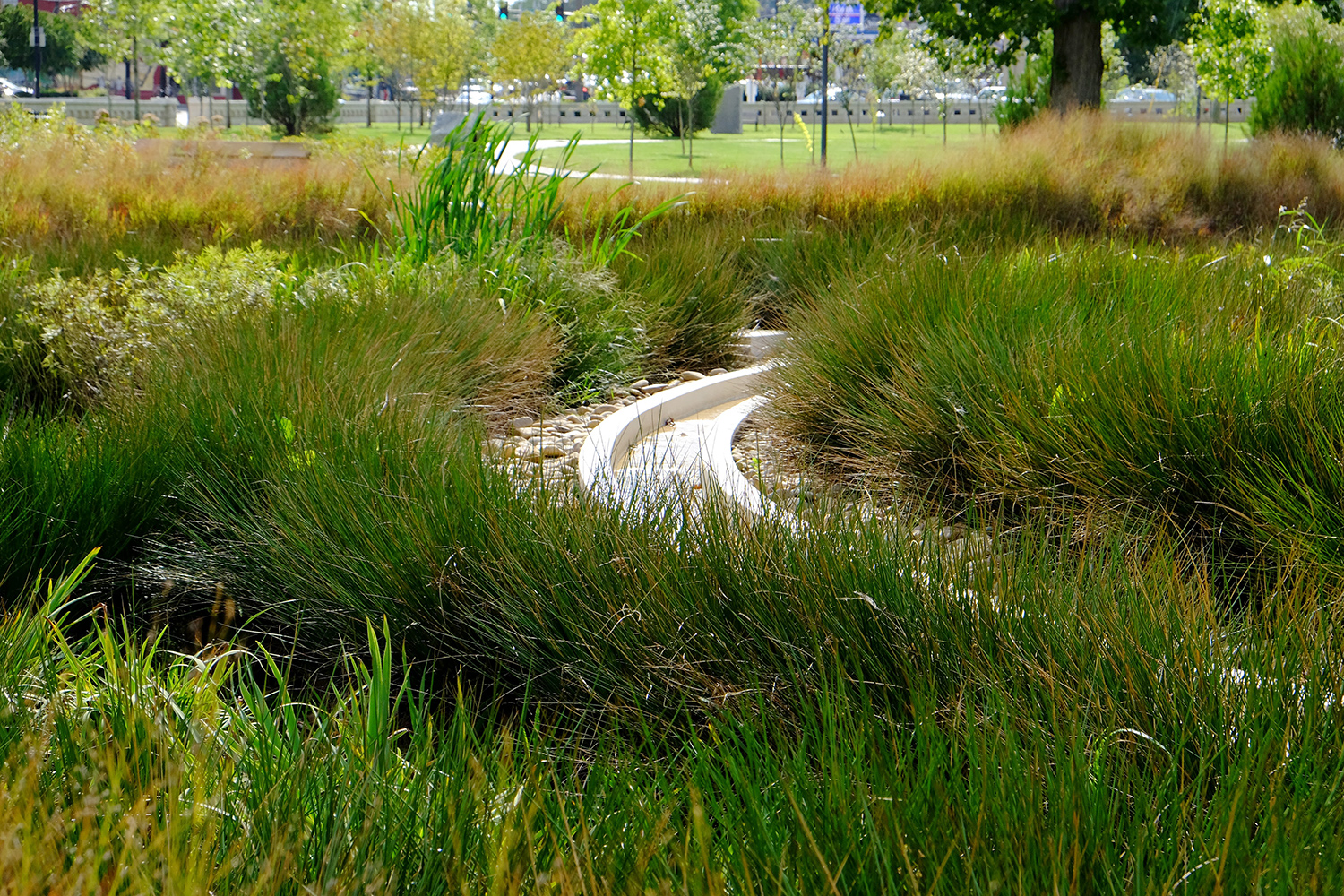
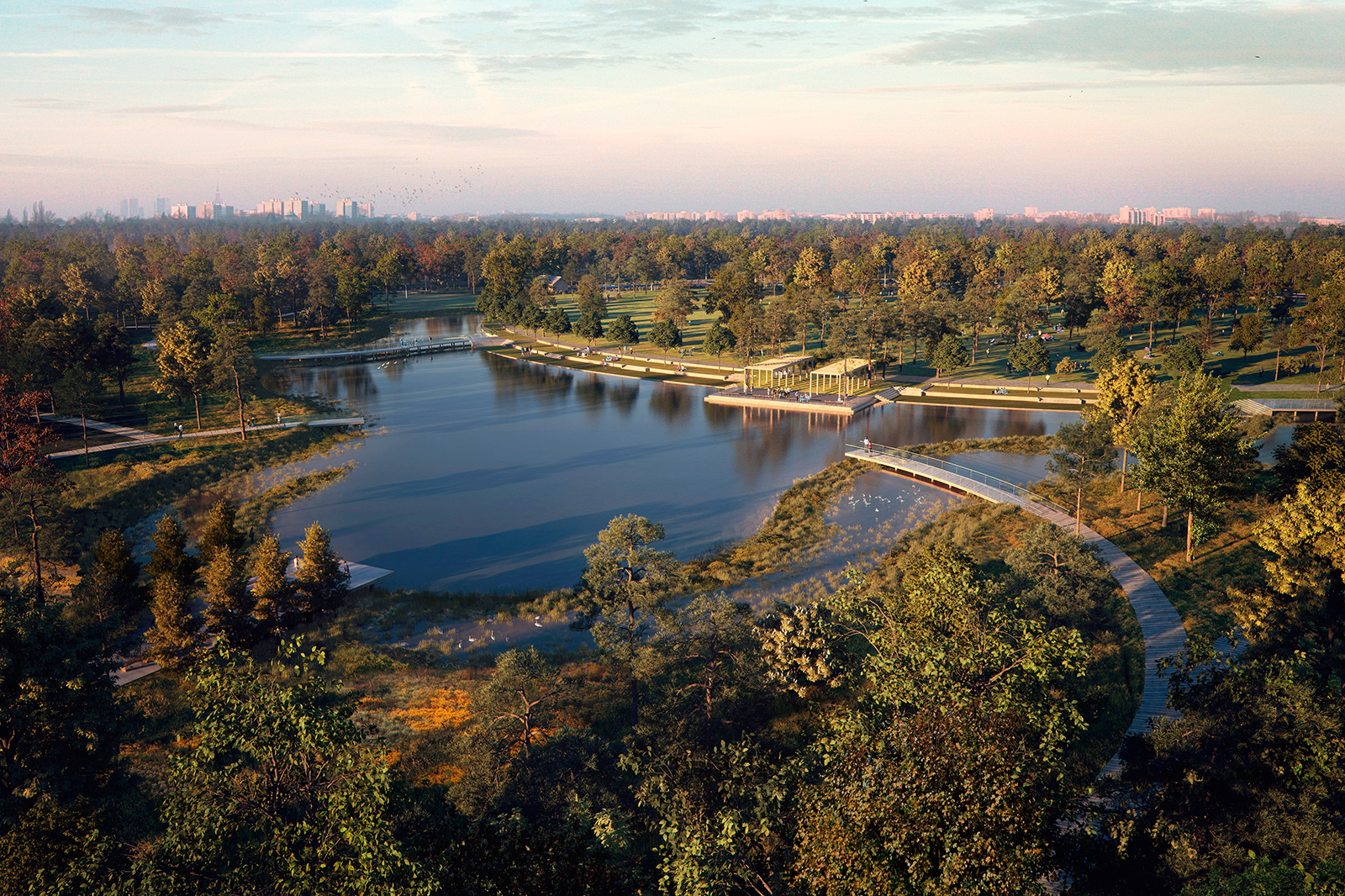
Weaning the 1,560-acre park from potable water involved channeling and filtering runoff from a nearby freeway into five constructed ponds that can be used to feed the park. "We keep the highway from flooding, we can stop irrigating [with drinking water], and we’ve made a beautiful curved aquatic edge to a great green," Woltz says.
NBW and the global engineering firm BuroHappold are developing a systemthat draws water from a river to cool the campus’s air-conditioning system. A lake planted with native shrubs and perennials blends heavy infrastructure with landscape. "It’s 'how do we turn utility into an amenity?'" Woltz says.

HUDSON YARDS, NEW YORK

"Landscape architecture has been burdened with a graphic approach—a lot of pattern-making that’s cool but not about the place," Woltz says. To avoid that cliché, the Hudson Yards plantings are organized in elliptical orbits emanating from an interactive sculpture by British designer Thomas Heatherwick.

Saturday, November 5, 2016

2016 Architecture & Design Trends-Series-4

Trends define a generation. In architecture, they create moods for the industry and determine how personal space may influence daily lifestyles. Before presenting our 7 current home design trends, it is important to clarify the difference between ‘trend’ and ‘fad.’ Often used synonymously, their meanings are quite different.

A trend is something that catches on. It has the potential to persist for decades in some cases. What confuses many people is that a trend and a fad often look very similar in the beginning. Put concisely: a trend will give direction and a fad is just a craze. At HMH, we have solidified a custom design style that fuses classic trends with modern elements to become our own special brand of interior design and architecture.

Now on to the architecture & design trends in 2016 that we are excited about! From sustainable materials to functional living spaces and art deco prints, here are 7 architecture and design trends in 2016 to keep an eye out for…


Larger Windows

Architecture Design Trends There is nothing like having architectural elements that allow your indoor living to expand and blend with the outdoor space. Large, sliding glass windows and/or doors serve to discard the separation between indoors and outdoors completely.
Floor-to-ceiling windows replace walls so each room has unobstructed views. . Advancements in window energy performance make this possible. Well-performing custom windows and doors have never been cheaper and more accessible.

Tuesday, October 25, 2016

A passion for Lego became a full-time master-builder job for one fan

The tallest building in the world is 828 metres tall. It took 22-­million man hours over six years to construct, using 110,000 tonnes of concrete. The Lego version of the Burj Khalifa, which is on show at Stack Dubai, is four metres tall, weighs 100 kilograms, consists of 80,000 blocks and took four months to build.

But the meticulous endeavour by Lego’s craftsmen to create the replica with tiny plastic bricks, steel and lighting is, in its own way, just as ­extraordinary.

    The model was designed by British Lego master builder Edwin Diment, who researched the tower up close before creating blueprints and plans for the scaled-down version alongside skilled builder Matt Ledwich and a team of helpers. The model features working lights and thousands of transparent Lego elements that makes it shine on the outside.
    "I have personally visited and been up in the Burj Khalifa," says Diment, who makes a living from building incredible Lego ­models.

      "While this is a useful insight, it is no substitute for those engineering drawings to get the scaling correct.
      "We tend to work out a lot of the dimensions beforehand to make the build go smoothly and get everything in ­proportion."
      The 44-year-old enthusiast has been building with Lego since he was 2, but one particular creation ­altered his career path.
      "I’ve played with Lego all my life and my first Moc, or My Own Creation, was a giant robot when I was 6 years old," he says.

        "But it was when I created a huge Lego spaceship 15 years back that was the turning point. I posted it online and, to my surprise, discovered the whole Lego community. That’s when I joined the Brickish Association, the UK fan club for adult Lego builders."
        As an Afol – or Adult Fan of Lego – Diment has built more than 100 models. The one that caught the attention of the Lego community was of the aircraft carrier USS Intrepid, which was seven metres long and used about 250,000 bricks.

          "This was a collaborative build with my wife, Annie, and fellow Afol Ralph Savelsberg," he says. "We got to set the model up on board the real Intrepid in New York, which is now a­ ­museum."
          According to the Lego expert, the main prerequisites for becoming a master builder are passion and hard work.
          "It took nearly 40 years of Lego building to get to the skill level I now possess," says Diment.
          His efforts paid off when they won him a full-time builder’s job with Bright Bricks, a professional Lego-building company in the United Kingdom.

            "Quite a lot of my fellow Brickish members make a living from Lego bricks," he says. "My business partner, Duncan, became the UK’s only Lego-certified professional a few years ago and asked me to join, knowing my building skills."
            Diment says that in the past 12 months alone he has worked on more than 30 Lego models.
            "Altogether, the organisation has built about 300 models in the past year," he says. Most of the models created in the UK are stored in an industrial unit in Hampshire and only taken out and reassembled when they are on tour.

              His team began working on the Burj Khalifa model in May.
              "It took fours months, but this was because it was a very start-stop build," he says.
              "The addition of steel and lighting means we were sometimes waiting for parts to arrive and then built in short bursts. But overall, it probably took a month of actual build time."
              Transporting this labour of love is an even more challenging task.
              "It separates into three sections and is then braced inside a pallet box," he says. "It is then sent, along with a lot of other models, on board a shipping container."

                Diment’s next collaborative project will be with fellow UK-based Lego builders.

                Monday, October 24, 2016

                High-Tech Style Interior Design Ideas-Best Design Ideas

                Definition of High-tech style


                High-tech is an architectural design style that emerged in the Late Modernism period in the 1970s and has been widely used in the 1980s. Mostly Englishmen are major theorists and practitioners of high-tech. They are Norman Foster, Richard Rogers, Nicholas Grimshaw, James Stirling at some phase of his oeuvre, and the Italian Renzo Piano. This style originated in the industrial premises design, where all the elements are functional. Different elements of industrial aesthetics were used in the living accommodations, where they have been developed into a mixture of high technology and constructivism.

                High-tech style in the interior

                Constructional knots, fasteners, all kinds of joints and rivets, and an abundance of glass and metal details became the elements of the decor in this Interior where most of the engineering equipment is opened. Industrial building constructions, metal frames, and technical communications are common for the high-tech style. Pipes, valves, air ducts, elevators, lintels, beams, trusses, and cables are expressly put on a show. Functionality, lack of decor, and geometric shapes are expressed by glass and metal constructions, mainly of a monochrome palette, and the active usage of technical innovations. Metal, glass, plastic, natural and artificial stones are used as the finishing materials.

                2016 Architecture & Design Trends- Inside and Outside Have Become One-Series-4

                2016 Architecture & Design Trends

                Trends define a generation. In architecture, they create moods for the industry and determine how personal space may influence daily lifestyles. Before presenting our 7 current home design trends, it is important to clarify the difference between ‘trend’ and ‘fad.’ Often used synonymously, their meanings are quite different.
                A trend is something that catches on. It has the potential to persist for decades in some cases. What confuses many people is that a trend and a fad often look very similar in the beginning. Put concisely: a trend will give direction and a fad is just a craze. At HMH, we have solidified a custom design style that fuses classic trends with modern elements to become our own special brand of interior design and architecture.

                Now on to the architecture & design trends in 2016 that we are excited about! From sustainable materials to functional living spaces and art deco prints, here are 7 architecture and design trends in 2016 to keep an eye out for…

                Inside and Outside Have Become One

                indoor/outdoorWhat used to be a very defined line, or wall, is now blurred. Rooms now blend into the outdoors without worrying about a solid distinction. Homeowners want the exterior to be just as important as the interior living spaces and are including everything from full kitchens, to furniture and TVs.
                Private courtyards that open up to two or three rooms in the home extend the living and entertaining space and accessibility as well as the utility

                Thursday, October 6, 2016

                Art Interior Design Principles

                Interior design, planning and design of man-made spaces, a part of environmental design and closely related to architecture. Although the desire to create a pleasant environment is as old as civilization itself, the field of interior design is relatively new.

                Since at least the middle of the 20th century, the term interior decorator has been so loosely applied as to be nearly meaningless, with the result that other, more descriptive terms have come into use. The term interior design indicates a broader area of activity and at the same time suggests its status as a serious profession. In some European countries, where the profession is well established, it is known as interior architecture. Individuals who are concerned with the many elements that shape man-made environments have come to refer to the total field as environmental design.

                Principles Of Interior Design

                It is important to emphasize that interior design is a specialized branch of architecture or
                Principles Of Interior Design
                environmental design; it is equally important to keep in mind that no specialized branch in any field would be very meaningful if practiced out of context. The best buildings and the best interiors are those in which there is no obvious disparity between the many elements that make up the totality. Among these elements are the structural aspects of a building, the site planning, the landscaping, the furniture, and the architectural graphics (signs), as well as the interior details. Indeed, there are many examples of distinguished buildings and interiors that were created and coordinated by one guiding hand.

                Because of the technological complexity of contemporary planning and building, it is no longer possible for a single architect or designer to be an expert in all the many aspects that make up a modern building. It is essential, however, that the many specialists who make up a team be able to communicate with each other and have sufficient basic knowledge to carry out their common goals. While the architect usually concerns himself with the overall design of buildings, the interior designer is concerned with the more intimately scaled aspects of design, the specific aesthetic, functional, and psychological questions involved, and the individual character of spaces.

                Saturday, September 24, 2016

                Famous Architecture World Wide

                20 Examples of Famous Architecture of the word

                Beijing National Stadium
                13. Beijing National StadiumAlso known as Bird’s Nest, this phenomenal stadium was built for the 2008 Summer Olympic Games. The idea for this amazing structure was the result of cooperation of Chinese and international architects and artists. As soon as man realized he is in the need of a shelter, architecture started developing. Over a long course of human history the art of building has conjured up many grand, beautiful and astounding structures, monuments to the perfect marriage of science and art. Each historic period is marked by one or more world famous architectural achievements, special because of their scale, engineering, materials or ornaments. Whether these architectural landmarks are dedicated to religious or secular purpose does not impact their value, while they stand proud as epitomes of human intellect and spirit.
                Our list of 20 monuments of the world is assembled in the attempt to bring you closer the historical and the modern traits of what makes the famous architecture.

                1. Eiffel Tower 


                Eiffel TowerParis, France - Constructed in 1889, the Eiffel Tower is one of the most famous structures in the world. It’s named after the engineer Gustave Eiffel and it was build as the entrance arch for the World Expo of 1889. The tower is 324 meters high, approximately as an 81 storey building. Today, the tower attracts millions of visitors every year. Pin It1. Eiffel Tower – Paris, FranceConstructed in 1889, the Eiffel Tower is one of the most famous structures in the world. It’s named after the engineer Gustave Eiffel and it was build as the entrance arch for the World Expo of 1889. The tower is 324 meters high, approximately as an 81 storey building. Today, the tower attracts millions of visitors every year.

                2. The Burj al Arab 


                Dubai - Built on an artificial island 280 meters away from the coast, the Burj al Arab in Dubai is one of the most luxurious and the fourth tallest hotel in the world. It’s 321 meters high and it represents one of the wonders of contemporary engineering. The building is designed by Tom Wright of WKK architects and its shape emulates shape of the sail of a ship. Pin It2. The Burj al Arab – DubaiBuilt on an artificial island 280 meters away from the coast, the Burj al Arab in Dubai is one of the most luxurious and the fourth tallest hotel in the world. It’s 321 meters high and it represents one of the wonders of contemporary engineering. The building is designed by Tom Wright of WKK architects and its shape emulates shape of the sail of a ship.

                3. Parthenon

                Athens, Greece - The most famous and the best preserved temple of ancient Greece had a lot of influence on the architecture, art and aesthetics of the western world. It was built in the 5th century BC, dedicated to the goddess Athena Parthenos, the patron of Athens. Its sculptures, ornaments and friezes are today considered the finest examples of Classical Greek art. Its supervising architect, Phidias is still known by name as one of the best sculptors and builders of the ancient times. Pin It

                 Barcelona, Spain

                One of the most elaborate churches in history, with a construction that has taken the most of the 20th century. Designed by one of the greatest minds of modern architecture, Antonio Gaudi, the cathedral represents the fantastic fusion of gothic influences and singular art nouveau ideas. It’s construction started in 1882, lasting through decades until the Spanish Civil War and the World War II, when it stopped. Resuming the building in the 1950s, the process is not over yet. Although the church has been consecrated in 2010, the final completion is planned for 2026, the year of 100 years anniversary of Gaudi’s death. Although unfinished, this building is huge and breathtaking with myriads of ornaments adorning its constructive elements, making it one of the most recognizable symbols of the city.

                5. Angkor Wat – Cambodia  

                At first Hindu, then Buddhist, Angkor Wat was the most mysterious temple and the largest religious complex in the world. It was built in the 12th century by the Khmer King Suryavarman, intended to be the state temple and then his mausoleum. After Hinduist traditions were abandoned, Angkor Wat was dedicated to the Buddhist deity Vishnu. The complex is the symbol of Cambodia and it found its place on the Cambodian national flag. Vast and impressive, this brilliant example of Khmer architecture is captivating in its beauty and strong in its traditional structure.Pin It5. Angkor Wat – CambodiaAt first Hindu, then Buddhist, Angkor Wat was the most mysterious temple and the largest religious complex in the world. It was built in the 12th century by the Khmer King Suryavarman, intended to be the state temple and then his mausoleum. After Hinduist traditions were abandoned, Angkor Wat was dedicated to the Buddhist deity Vishnu. The complex is the symbol of Cambodia and it found its place on the Cambodian national flag. Vast and impressive, this brilliant example of Khmer architecture is captivating in its beauty and strong in its traditional structure.

                6. Saint Peter’s Basilica – Vatican, Rome, Italy


                Probably the most famous Catholic church in the world, Saint Peter’s in Rome was designed by Donato Bramante, Michelangelo, Carlo Maderno and Gianlorenzo Bernini, respectively, with smaller additions by other prominent architects. It’s an elaborate basilica, and the most revered building of Renaissance architecture. Pin It6. Saint Peter’s Basilica – Vatican, Rome, ItalyProbably the most famous Catholic church in the world, Saint Peter’s in Rome was designed by Donato Bramante, Michelangelo, Carlo Maderno and Gianlorenzo Bernini, respectively, with smaller additions by other prominent architects. It’s an elaborate basilica, and the most revered building of Renaissance architecture.


                7. Sydney Opera House - 


                One of the most famous opera houses in the world, because of its building. It was designed by Danish architect Jorn Utzon, who was celebrated for the groundbreaking modern design. Sydney Opera House was opened in 1973, staging large theatrical productions. Pin It7. Sydney Opera HouseOne of the most famous opera houses in the world, because of its building. It was designed by Danish architect Jorn Utzon, who was celebrated for the groundbreaking modern design. Sydney Opera House was opened in 1973, staging large theatrical productions.

                8. Colosseum -


                This ancient Roman amphitheatre is considered one of the greatest achievements of Roman architecture. It was constructed in 70-80 AD, and it’s one of the first buildings in history where concrete was used for construction.Pin It8. ColosseumThis ancient Roman amphitheatre is considered one of the greatest achievements of Roman architecture. It was constructed in 70-80 AD, and it’s one of the first buildings in history where concrete was used for construction.

                9. Tower Bridge London - 


                The symbol of London and a pearl of the 19th century architecture, Tower Bridge was built as a combination of bascule bridge and suspension bridge in 1886 – 1894. Pin It9. Tower Bridge LondonThe symbol of London and a pearl of the 19th century architecture, Tower Bridge was built as a combination of bascule bridge and suspension bridge in 1886 – 1894.


                10. Hagia Sophia Istanbul - A monumental church


                , then mosque and today a museum. It’s a singular testimony to the grandeur and the genius of Byzantine architecture. It was built in 6th century AD, during the reign of Emperor Justinian. Pin It10. Hagia Sophia IstanbulA monumental church, then mosque and today a museum. It’s a singular testimony to the grandeur and the genius of Byzantine architecture. It was built in 6th century AD, during the reign of Emperor Justinian.

                11. Kremlin - Moscow Kremlin


                is a large fortified complex set in the bosom of Moscow. It was built in 15th century and the fortress spans over almost 28 hectares of land, with its impressive red walls, towers and buildings. It’s the seat of Russian government. Pin It11. KremlinMoscow Kremlin is a large fortified complex set in the bosom of Moscow. It was built in 15th century and the fortress spans over almost 28 hectares of land, with its impressive red walls, towers and buildings. It’s the seat of Russian government.

                12. Empire State Building 


                Rarely a person travels to New York without planning to visit the Empire State Building. It is the symbol of the city and the pioneering skyscraper, with its 103 stories. This 381 meters high structure was designed by William F. Lamb and completed in 1931, becoming one of the first skyline creators of the Big Apple. Pin It12. Empire State BuildingRarely a person travels to New York without planning to visit the Empire State Building. It is the symbol of the city and the pioneering skyscraper, with its 103 stories. This 381 meters high structure was designed by William F. Lamb and completed in 1931, becoming one of the first skyline creators of the Big Apple.

                14. Petronas Towers Kuala Lumpur - 


                These twin towers were the tallest buildings in the world in the period from 1998 to 2004, and still are the tallest twin buildings in the world. Their complex and supermodern design initiated the construction of the post-modern Kuala Lumpur. Pin It14. Petronas Towers Kuala LumpurThese twin towers were the tallest buildings in the world in the period from 1998 to 2004, and still are the tallest twin buildings in the world. Their complex and supermodern design initiated the construction of the post-modern Kuala Lumpur.


                15. Leaning Tower Pisa - 


                The campanile of the cathedral of Pisa, Tuscany is world famous for its leaning position. Started in the 12th, the tower was completed in the second half of the 14th century, and it is the iconic building of the late Italian Romanesque style. Pin It15. Leaning Tower PisaThe campanile of the cathedral of Pisa, Tuscany is world famous for its leaning position. Started in the 12th, the tower was completed in the second half of the 14th century, and it is the iconic building of the late Italian Romanesque style.

                16. Taj Mahal - Mughal emperor 


                Shah Jahan built the most fantastic and the most beautiful monument to love, for his early deceased wife Mumtaz Mahal. The entire building is covered in white marble, depicting architecturally the ideal vision of heaven. Constructed in the 17th century, it is located in Agra, in the Indian region Uttar Pradesh. Pin It16. Taj MahalMughal emperor Shah Jahan built the most fantastic and the most beautiful monument to love, for his early deceased wife Mumtaz Mahal. The entire building is covered in white marble, depicting architecturally the ideal vision of heaven. Constructed in the 17th century, it is located in Agra, in the Indian region Uttar Pradesh.

                17. Guggenheim Museum Bilbao - 


                There was no better choice for the contemporary art museum architect, but the Guggenheim Museum Bilbao designer – the amazing Frank Gehry. The building is the fantastic creation, covered in shiny sheets of metal, transferring the visitor into another dimension. The museum was inaugurated in 1997. Pin It17. Guggenheim Museum BilbaoThere was no better choice for the contemporary art museum architect, but the Guggenheim Museum Bilbao designer – the amazing Frank Gehry. The building is the fantastic creation, covered in shiny sheets of metal, transferring the visitor into another dimension. The museum was inaugurated in 1997.

                18. Flatiron Building 


                A groundbreaking triangular solution of early modern architecture. The Flatiron Building was designed by Daniel Burnham and completed in 1902. This New York landmark was the tallest building in the world at the time it was completed. Pin It18. Flatiron BuildingA groundbreaking triangular solution of early modern architecture. The Flatiron Building was designed by Daniel Burnham and completed in 1902. This New York landmark was the tallest building in the world at the time it was completed.

                19. Villa Savoye


                One of the most renowned modernist villas, built by the modern architecture pioneer Le Corbusier in Poissy, near Paris. The villa was constructed after the emblematic “Five Points” the famous architect relied on, while conjuring up the modern style. Pin It19. Villa SavoyeOne of the most renowned modernist villas, built by the modern architecture pioneer Le Corbusier in Poissy, near Paris. The villa was constructed after the emblematic “Five Points” the famous architect relied on, while conjuring up the modern style.


                20. Kauffman Residence or Fallingwater 


                One of the most renowned modernist villas, built by the modern architecture pioneer Le Corbusier in Poissy, near Paris. The villa was constructed after the emblematic “Five Points” the famous architect relied on, while conjuring up the modern style. Pin It20. Kauffman Residence or FallingwaterOne of the most admired buildings designed by Frank Lloyd Wright, built in 1935 near Pittsburgh, Pennsylvania. The modern house is set above a natural waterfall, fusing the artificial and the natural in perfect harmony. Fallingwater was proclaimed “best all time work of American architecture” by the American Institute of Architects in 1991.

                Wednesday, September 21, 2016

                3-D printed house debuts in China

                Dive Brief:

                • A 3-D-printed, single-family house in China's Shandong Province joins the growing number of freestanding structures created using additive manufacturing technology, according to 3DPrint.com, evidencing its potential for residential and commercial construction.
                • The concrete structure, which took two months to build using 3-D printers measuring 20 meters (66 feet) wide and 6 meters (20 feet) tall, is the first phase of an "ongoing park project," according to its developers.
                • The project team estimates construction costs at roughly 5,000 yuan ($750) per square meter, and it expects that figure to drop as the technology improves.

                Dive Insight:

                3-D printed house debuts in China

                3-D printing for construction is gaining in popularity in China, in particular, where builders have also constructed a six-story apartment building using the technology. While advances in 3-D printing stateside offer architects and developers an interesting, vertically integrated design and production tool, the technology has yet to achieve wide-spread adoption in construction projects, instead focusing mostly on parts and components.
                Cost is a primary reason for the small-scale focus, and questions of job site supply logistics and general assembly labor will likely need to be addressed for 3-D printing to be seriously considered in any kind of production builder or commercial construction capacity. How close do 3-D printers need to be to the job site in order to be useful? Who will operate them, and how might they impact project management decisions? Those questions are only beginning to be explored.
                Modular construction is one opportunity for 3-D printing to scale up. Last year, architectural firm Skidmore, Owings & Merrill partnered with the U.S. Department of Energy's Oak Ridge National Laboratory, housing manufacturer Clayton Homes, and the College of Architecture and Design at the University of Tennessee to create a panelized enclosure and companion vehicle, both 3-D printed, that share and store renewable energy to stay off-grid during periods of peak demand.
                Proof of concept isn't necessarily a proof of economics, however, and it may be that 3-D printing will offer more value to the construction industry — and thus experience greater investment — by providing machining and parts manufacturing to support crews and equipment during traditional building processes.

                Saturday, September 17, 2016

                12 Facts about Interior Designers Everyone Thinks Are True

                 1. Interior Designers Do the Same Thing as Interior Architects

                A lot of people are confused by the many different job titles there are in the design industry. However, a very common mistake is to think that interior designers and interior architects do the same job. The reality is that these professions can involve many different things which are more often than not, very far apart. Generally speaking, interior design has more to do with the art of the building, while interior architecture is more concerned with the science behind it.Now a day's lot of people have dream to build their house or home as latest model just like villa,So there is lot facts to design  home interiors,these are the 12 factors of interior designs should follow now.
                 below 12 facts we refferal from idesigni.co.uk

                12 Facts about Interior Designers Everyone Thinks Are True 2. Interior Design Is All About Décor

                Interior design involves much more than just a good knowledge of décor. As we’ve mentioned in our previous article on the topic, the practice of interior architecture requires designers to consider pretty much everything to do with the building of an interior space that will affect human habitation, including materials, finishes, electrical requirements, plumbing, lighting, ventilation, ergonomics, and intelligent use of space. Interior designers with training in interior architecture will usually be present at, and have an important say during all stages of the construction process, from the initial plans right through to the finishing touches.interior decoration

                3. Hiring an Interior Designer Is Very Costly

                Depending on the scale of the project, the budget and the time frame you have in mind for finishing it, the price of hiring a professional interior designer can vary dramatically. In most cases, interior designers charge very reasonable fees and the value you get for your money will be worth paying for. If you’re not sure how much your interior design project would cost, you can simply enquire and decide if you are ready to pay for it.

                4. Interior Designers Only Work With Very Expensive Materials

                As every other professional, interior designers can work with both expensive and cheap materials and products. More importantly, they will work within the limits of the budget and requirements you give them as their client. You have to remember that the price of materials is not always crucial to getting the end result you desire. If you’re working with an experienced interior designer, they should be able to recommend you the best quality products at the most reasonable price there is.expensive fabrics

                5. You Don’t Need To Have an Education to Become an Interior Designer

                There are many people out there that claim that they are interior designers, without having any formal education. However, as explained in some of the other points above, interior design is a very challenging and exciting profession that includes a variety of tasks and requires a great deal of skills and knowledge. The only way you can ensure that you have all these on board when applying for a job, even at an intern level, will be to obtain a formal qualification from a recognized organization. A career in interior architecture and design can be difficult to get started and an accredited course in the subject will give you a head start by providing you the knowledge, skills, and qualifications you need to succeed.

                6. Interior Designers Make All The Decisions For You

                Don’t expect that all decisions on an interior design project would be made by the designer you have hired. He or she will have a lot of recommendations on the way ideas can be implemented, but the final decisions will lie with you.

                7. Interior Designers Can’t Work With Existing Structures, Materials And Objects – They Always Want To Throw Everything Old Away

                The truth is that interior designers always work towards achieving the goals in an interior design plan. If this plan involves the stripping of a building to its bare bones they would definitely need to throw everything old away. This is not always necessary and you can keep as much of your old stuff in your new house or space as you want.

                8. “I Don’t Need an Interior Designer – I Can Do It on My Own”

                As we outlined earlier in the article, interior design is a very complex job. You can try and do some of its components on your own, but unless you have the training and understanding of interior design concepts, we think you shouldn’t start any project, small or big without a professional eye. There are so many examples of terrible design decisions that show that it is not worth risking your dream project, if you can leave it to the professionals. At the end of the day, you wouldn’t operate on somebody if you’re a doctor, right?
                Amateur design plan
                Photo by Alan Levine licensed under CC BY-SA 2.0

                9. Interior Designers Always Want To Be Trendy

                Interior designers always strive to be aware of the new trends in their profession. However, they wouldn’t force you to do something on your project if you don’t like it or you think it doesn’t suit your needs. Trends are interesting to follow, but they are not something every interior designer tries to implement in their work.

                10. Interior Designers Don’t Need A Plan For Their Projects

                Interior designers can’t work without a plan for their project. They need to think about every single detail and plan in appropriate time for it. A good plan means that as a customer you will get an idea on the cost involved as well as the deadline for completion of each stage. Planning is a crucial part of the job of the interior designer.

                11. Interior Design Doesn’t Require a Lot of Time.

                Interior design projects can take a lot of time and this usually happens because the whole process requires the attention, skills and knowledge of the many other specialists who work with the interior designer. The designer needs to be able to speak everyone else’s language – from the plumber to the conservation officer, to be able to make the project plan work. This doesn’t mean that all interior design projects take years to complete – a complex, but very well organised job on a residential property, for example, can take around five months from start to finish.

                12. Interior Designers Don’t Need To Work towards a Budget


                A good plan always comes with a clear idea of the budget the client has for it. There’s no such thing as “open budget” – interior designers should know what is affordable and what is not, because this can help them make some very important decisions. Give your interior designer a budget to work with and leave the magic touch to them!